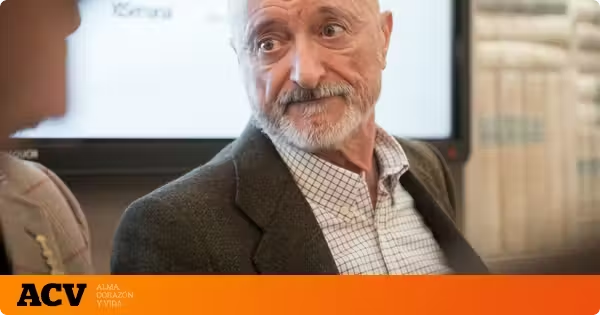
Spanish writer Arturo Pérez-Reverte, nearing his 75th birthday, recently used his platform to offer a stark reflection on how to navigate modern life, moving away from comforting illusions toward a sharper form of realism. Speaking on the Spanish radio program 'La Ventana' by Cadena SER, the author introduced a philosophy that challenges the pervasive culture of toxic positivity. Pérez-Reverte asserted, 'Being always prepared for everything to go wrong is not pessimism, it is tactical realism for living.' This statement serves as a direct counterpoint to the self-help narratives that dominate social media, advocating instead for a constant state of vigilance against future uncertainties rather than relying on magical thinking or effortless solutions. The writer clarified that this mindset is not an exercise in negativity or a call to surrender. Instead, he framed it as a practical mechanism for adaptation and self-defense. For Pérez-Reverte, the danger lies in 'blind and naive optimism'—the belief that circumstances will improve simply because one wishes them to. He argued that embracing uncertainty is not meant to paralyze ambition or dampen spirits. On the contrary, it serves to train temperance, prevent complacency, and sharpen reflexes so that individuals are not caught off guard when situations deteriorate. By anticipating a potentially hostile environment, the emotional and material impact of setbacks becomes more manageable, allowing for quicker and more effective problem-solving. This worldview is not derived from abstract theory but is deeply rooted in Pérez-Reverte’s extensive biography. As a veteran war correspondent who has worked in some of the world’s most volatile regions, and as someone who has logged thousands of miles sailing on open seas, he has learned that ignoring danger or deceiving oneself is a fatal error. In both combat zones and unpredictable ocean currents, preparing for the worst-case weather or tactical scenarios is an elementary survival measure. He now applies this habit of survival instinct to the daily vicissitudes of ordinary life, treating uncertainty as a standard condition rather than an anomaly. He specifically critiques the modern tendency to educate society under the assumption that the world is a safe, predictable, and fair place. In his view, instilling this belief leaves people defenseless when reality inevitably reveals its harshness. He draws a clear distinction between those who give up in defeat and those who choose to keep their eyes open. While the defeated posture yields before the storm even arrives, the practitioner of tactical realism gathers supplies, sharpens resources, and prepares to navigate the tempest with serenity and aplomb. Linking these views to his latest novel, 'La hipótesis más peligrosa' (The Most Dangerous Hypothesis), Pérez-Reverte also addressed how contemporary generations, particularly youth, interact with digital environments and video games when processing unexpected events. He acknowledged that interactive formats can serve as useful simulators for practicing decision-making and calculating risks in chaotic scenarios. However, he issued a crucial warning often overlooked in digital engagement: in real life, there is no reset button, nor is it possible to restart if the protagonist fails catastrophically. This distinction highlights the finite nature of reality compared to the reproducible nature of simulations. Ultimately, his invitation is towards Stoic maturity and individual responsibility. Blinding one’s tranquility does not mean avoiding problems with a fake smile, but facing them head-on. Transforming human fragility into an active strength requires accepting the changing nature of our surroundings and taking ownership of one’s decisions without waiting for external miracles. Cultivating this sensible mental preparation becomes the most reliable shield for maintaining one's course, regardless of what happens around the corner. Embracing uncertainty does not seek to paralyze projects or feed sadness, but rather to provide firm reflexes for when the wind blows against us. This stance reminds us that securing one's peace of mind requires accepting the nature of things and taking charge of decisions without external magic, turning human fragility into active strength. [1]
- Categories:
- Culture