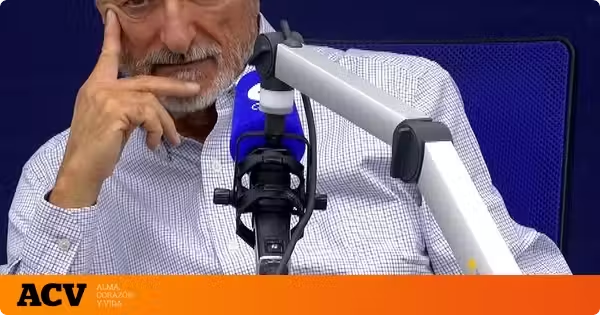
The rapid advancement of artificial intelligence has ignited an intense global debate regarding the future of literature, the nature of creativity, and the evolving role of professional writers. As technological tools make it increasingly effortless to generate complex texts, critical questions have emerged concerning the authenticity of authorship and the intrinsic value of human creation. Spanish author Arturo Pérez-Reverte addressed these systemic shifts during an interview with Jorge Bustos on the 'Herrera en COPE' radio program, where he reflected on the broader transformations currently reshaping Western society. [1]
Pérez-Reverte, who appeared on the program to promote his latest novel, *La hipótesis más peligrosa* (The Most Dangerous Hypothesis), was specifically questioned about the growing controversy surrounding literary works that have won awards despite being written almost entirely by AI. Rather than expressing surprise or alarm, the novelist viewed this phenomenon as a symptom of a much larger civilizational transition. He described the trend as 'the world that is coming,' acknowledging that these AI tools possess the potential to profoundly alter the traditional craft of writing. [1]
For the author, the integration of these technologies is merely another indicator of the volatility facing Western civilization. He asserted that the world is moving toward a state of chaos, identifying a critical loss of reliability and an increase in pervasive uncertainty as primary challenges of this new reality. Despite this bleak outlook, Pérez-Reverte argued that these processes should be analyzed through a historical lens, recognizing that societies have always undergone deep and often disruptive transformations over time. [1]
Reflecting on his own perspective, the writer explained that his professional trajectory—particularly his experience as a war reporter—and his lifelong passion for history have granted him a sense of tranquility in the face of such upheaval. He suggested that serenity is the only viable way to navigate chaos, noting that even chaos operates under certain rules and is, ultimately, inevitable. [1]
In a candid admission, Pérez-Reverte confessed, 'I was educated for a world that has ceased to exist a long time ago.' He elaborated that the extreme situations he encountered throughout his life allowed him to adapt and observe the contemporary collapse of social structures from a detached position, which he described as viewing the world's decline with a form of 'scientific curiosity.' [1]
The novelist drew parallels between current events and the fall of great ancient civilizations, citing Troy, Rome, and Byzantium. While acknowledging that today's circumstances are unique, he maintained that historical patterns frequently repeat themselves. He remarked that he is witnessing the end of a world he has read about many times in historical texts, describing the era as 'sad' and 'twilight-like,' yet simultaneously 'interesting.' [1]
Beyond AI, the discussion extended to the role of video games as a modern medium of storytelling. Pérez-Reverte defended their capacity to revolutionize how audiences engage with narratives by transforming the user from a passive spectator into an active protagonist. He noted that gaming can enhance cognitive skills such as reaction speed and problem-solving, although he cautioned against the risks of excessive use. In his view, both video games and artificial intelligence are integral parts of a cultural metamorphosis that is redefining humanity's understanding of the world. [1]
- Categories:
- Culture