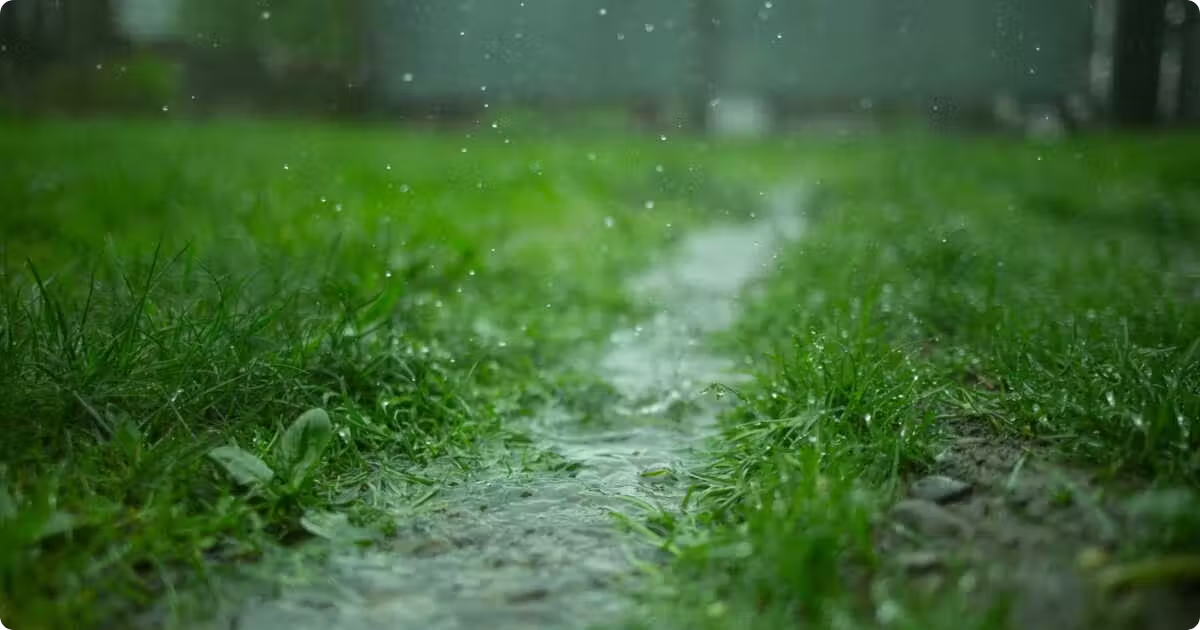
This week in November is marked by significant rain over much of France. Several departments were placed on orange alert between Wednesday 18 and Thursday 19 November. After a historically dry spring and summer 2026, abundant rain can seem welcome, but when precipitation is too intense it can harm soils and plantings, TF1 columnist and influencer Pierre le jardinier recalled. [1]
The risk is that water stagnates or leaches the soil, carrying nutrients deeper. He offered advice to protect gardens from heavy rain. [1]
To gauge the amount of water received by plants, a rain gauge bought for a few euros in a garden centre can show whether a plant has received more water than needed or, in summer, whether watering is still required after a storm. [1]
Do not garden immediately in the rain. Working a waterlogged soil risks compacting it. Wait for the first clear spells and then aim to promote drainage of excess water. [1]
Owners of a vegetable garden can build small ridges, low mounds in lines found in some fields, letting surplus water run toward furrows. Raising potted plants, for example by placing them on a brick, helps water evacuate more effectively than when pots sit directly on the ground. [1]
For flowerbeds, mulching can be used. The covering can be straw, fallen leaves or wood chips. It slows water accumulation. [1]
If plants have been exposed to heavy precipitation without protection, it can be opportune, once the sun returns, to add a little compost to replenish lost nutrients. [1]
- Categories:
- Agriculture