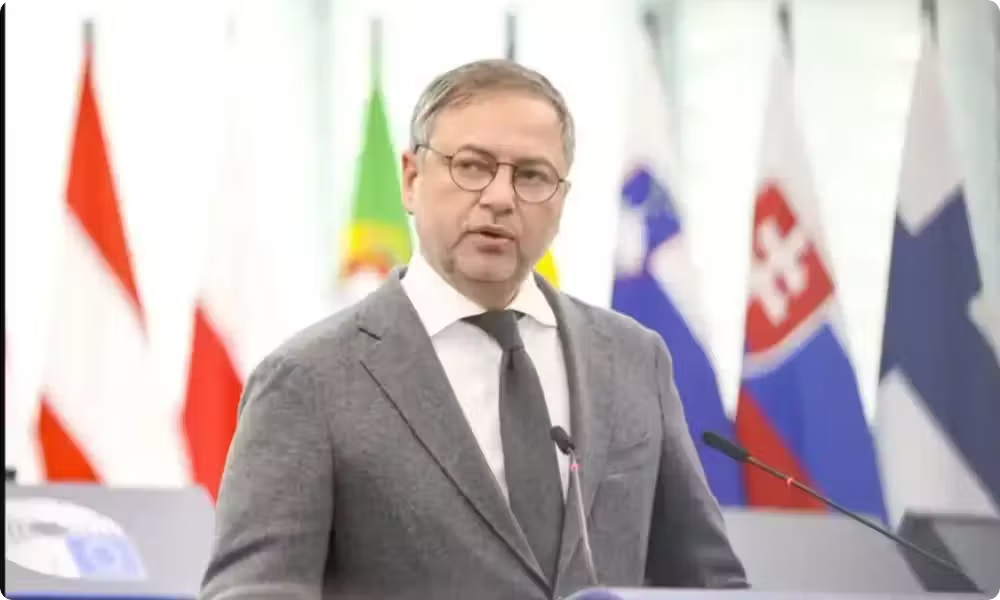
At the European level, Dan Motreanu highlighted the complexity of negotiations, stating that the EU budget must be ambitious and respond to specific needs, mentioning his colleagues Siegfried Mureșan and Daniel Buda as supporters of the cause. Digital infrastructure and modern public services are essential components of the rural development strategies promoted by Motreanu. The consensus is that the current financial framework must be reviewed to protect farmers. [1]
Agricultural production costs have risen significantly, affecting competitiveness, and farmers' incomes represent only 40% of the average salary. CAP Pillars I and II must be strengthened to provide predictability for Romanian farmers. Radu Burnete emphasized the importance of co-financing adapted to the capacity of states. [1] [6]
Generational renewal in agriculture remains critical. Administrative simplification is another urgent measure, according to the EPP. Romania must define its priorities as soon as possible to influence the outcomes of future negotiations. The complexity of negotiations reflects the competing interests of member states. [1]
Abandoning distinct Pillar II presents a risk. Clear guarantees are needed at the European level, regardless of internal political changes. The main risk is that rural funds will be redirected to other strategic areas important for member states. Support for the CAP must be maintained to avoid the comparative disadvantages of European farmers. [1]
European villages need long-term investments. The ultimate goal is retaining the population in rural areas through economic opportunities. Distinct Pillar II is seen as a safety barrier for investment stability in villages. [1]
Negotiations are complicated by the demands of some member states to reduce European expenditures or increase priority for defense. The press supports the view that the motivation behind these requests is securing a future for young farmers. [1]
The Christian Democratic Movement and the EPP are fighting for a substantial budget for agriculture and rural development. Cooperatives are essential for market access. [1]
As the story develops
Update
Florent Barbu: Over 3 billion euros for Romanian livestock in CAP 2028-2034
Florent Barbu, Minister of Agriculture, announced at the Agri Next 2026 conference that Romania's livestock sector could benefit from over 3 billion euros in European funding in the next term of the Common Agricultural Policy (CAP), for the period 2028–2034. The official stressed that the development of livestock farms must become a priority for Romanian agriculture. [2]
The statement regarding the restructuring of financing was made by Florent Barbu at the Agri Next 2026 conference, where he highlighted the need to strengthen the livestock sector and the importance of closer collaboration between crop production and animal husbandry. [2]
According to the minister, the new financial allocation should provide opportunities for the development of livestock farms. He indicated that over 3 billion euros from CAP 2028-2034 will be directed towards livestock development, in a vision that presupposes an agriculture where the crop and livestock sectors support each other. [2]
Florin Barbu explained that the performance of livestock farms depends on their ability to secure their own feed resources from domestic production. Investments in irrigation systems can play an essential role in the objective of optimizing animal production by obtaining additional yields and diversifying crops destined for animal feed. [2]
An example of approach indicated by the minister is corn cultivation for silage, as well as the utilization of successive crops. These measures can contribute to reducing production costs and improving the economic efficiency of livestock holdings, within a logistics framework that includes obtaining feed resources from domestic production. [2]
Florin Barbu also mentioned that processing plants need raw materials from Romanian farms, with several meat processing units under construction and requiring a constant flow of raw materials. However, details regarding fund access, financing conditions, eligible investment types, and the distribution method will be established after the adoption of the final CAP version and the implementation of national programs. [2]
Florin Barbu draws attention to the importance that the demand of these factories is covered, as much as possible, by domestic production. In this way, the development of livestock farms could contribute not only to strengthening the livestock sector but also to increasing the degree of valorization of agricultural production in the food industry. The objective is that investments made in processing are supported by sufficient production capacity at the national level, reducing dependence on imported raw materials. Florin Barbu, Minister of Agriculture, declared that processing plants need raw materials from Romanian farms. The Minister mentioned that in our country there are several processing units under construction, which will require a constant flow of raw materials, stating that it is important that the needs of these factories are covered as much as possible through internal production, so that the development of livestock farms can contribute to increasing the degree of valorization of agricultural production in the food industry. Florin Barbu explained that it is important that the demand of these factories is covered, as much as possible, by domestic production. In this way, the development of livestock farms could contribute not only to strengthening the livestock sector but also to increasing the degree of valorization of agricultural production in the food industry. The objective is that investments made in processing are supported by sufficient production capacity at the national level, reducing dependence on imported raw materials. Florin Barbu mentioned that it is important that the demand for raw materials for processing plants is covered by domestic production, and the objective is that investments in processing are supported by sufficient national production capacity, to reduce dependency on imports. [2]
Update
Florin Barbu and Elisabeth Werner at AGRI4FUTURE: Discussions on CAP reform and the budgetary vulnerabilities of Romanian agriculture
The AGRI4FUTURE Conference: Romania – Objective 2035, organized on Thursday in Bucharest by the Romanian Farmers Club, brought together representatives of European and national institutions, the business environment, and the agricultural sector to discuss agriculture perspectives in the context of negotiations regarding the future EU budget for the period 2028-2034. Participants include the Director-General for Agriculture and Rural Development at the European Commission, Elisabeth Werner, the Minister of Agriculture, Florin Barbu, and the Minister of Finance, Alexandru Nazare, along with European Commissioner Christophe Hansen and Vice-President of the European Parliament, Victor Negrescu, who will transmit video messages. Data presented by the Romanian Farmers Club highlight a persistent structural crisis: the financing deficit of Romanian agriculture was estimated at 11.4 billion euros in 2022, the highest in the European Union, and only 0.03% of Romanian farms are digitized. Meanwhile, Romania still exports two-thirds of its unprocessed grain production, contrasting with the European trend of reducing the number of farms by 37% (5.3 million) between 2005-2020 and with the aging of the average age of farmers, which has increased by 10 years, reaching 56 years. Farmers' incomes represent only 40% of the average salary, given that farm costs have risen by approximately 300% since 2007, compared to a price increase of grains by only 15%. [3]
Among the central themes of the debate is the upcoming reform of the Common Agricultural Policy (CAP), food chain security on the EU Eastern Flank and NATO, farm financing, digitalization, and generational renewal. The analysis presented by the organizers estimates that Romania's allocation for agriculture could drop from approximately 21.6 billion euros to 16.57 billion euros, highlighting the importance of the country's position in European negotiations. Sessions will address Romania's role in ensuring food security, investments in processing, storage, irrigation, and risk management, as well as access to finance and fiscal framework stability. [3]
Update
EC aims for stable agriculture in rural and competitiveness policies
The European Commission aims for stable agriculture in both rural and competitiveness policies, Elisabeth Werner, Director-General for Agriculture and Rural Development, stated at the National AGRI4FUTURE Conference: Romania – Objective 2035, organized on Thursday in Bucharest by the Romanian Farmers Club. She explained that the EU budget proposal for the period 2028-2034, adopted in an integrated manner in February 2025, does not refer only to agriculture, but also to the inputs necessary for farmers and processing capacity. Elisabeth Werner emphasized the need to create synergies between different financing instruments and approach them holistically, combining funds so they work better together. The amount allocated in the Commission's proposal is 16.5 billion euros, which could be supplemented with other funds. Commissioner Christophe Hansen mentioned that 10% of the budget, equivalent to 3.9 billion euros for Romania, will go to rural areas, with the possibility of programming an additional 3.8 billion euros for the agricultural and rural area. [4]
Priorities of the European Commission for the new agricultural policy include increasing financial support for young farmers through startup packages that include advice and investments; support for adapting to climate change and managing market disruptions; as well as allocating funds for research and innovation in fertilizers, fertilisers, and animal health. [4]
Update
Burnete: A portion of money for agriculture will no longer come automatically from Brussels, but also from Bucharest
Presidential advisor Radu Burnete announced on Thursday that part of the funds intended for agriculture will no longer come automatically from Brussels, but will also come from the national plan. This change occurs in the context of Romania's difficulties regarding the co-financing of agricultural projects. The message was transmitted by Radu Burnete on behalf of President of Romania, Nicușor Dan, emphasizing the need for national financial involvement alongside European mechanisms. The advisor explained that Romania has a budget deficit of 6% of GDP, making co-financing difficult, and that European money will lose real value due to inflation. Proposed modifications to the capping of agricultural payments are not final. [5] [6]
Update
Burnete: A portion of funds for agriculture will come from the national plan due to the deficit
Presidential advisor Radu Burnete announced at the National AGRI4FUTURE Conference that part of the funds intended for agriculture will no longer come automatically from Brussels, but will also be covered by the national plan, because Romania has a budget deficit of 6% of GDP and it will be difficult to co-finance any amount. Burnete warned that negotiations for the future European budget in November will be very difficult, and the ambitious target of the European Commission is unlikely to be reached, with money having lower real value due to inflation. Additionally, he mentioned that proposals to modify the mechanism for capping and reducing agricultural payments (modifying limits from 100,000 to 300,000 euros) are not definitive. [6]
Update
Burnete: Money for agriculture will come from the national plan due to the deficit
Presidential advisor Radu Burnete announced at the National AGRI4FUTURE Conference that part of the funds intended for agriculture will no longer come automatically from Brussels, but will be covered from the national plan, because Romania has a budget deficit of 6% of GDP and it will be difficult to co-finance any amount. Burnete warned that negotiations for the future European budget in November will be very difficult, and the ambitious target of the European Commission is unlikely to be reached, with money having lower real value due to inflation. Additionally, he mentioned that proposals to modify the mechanism for capping and reducing agricultural payments (modifying limits from 100,000 to 300,000 euros) are not definitive. [7]
Update
Jabbar Kanani: Land leasing could unlock agricultural financing without state guarantees
Jabbar Kanani, President of the Employers Association of Companies in the Fashion Industry (A.P.C.I.R.) and Agricover, requested the introduction of land leasing on Thursday in Bucharest to unlock financing in agriculture, stating that the big problem is not the lack of money, but the difficulty in using modern credit instruments. Kanani estimated that the agricultural heritage, represented by the 2.5 million hectares owned by farmers, is worth between 12 and 15 billion euros. He compared this value with the 50 billion lei (approximately 10 billion euros) available through banking and non-banking financing, supporting the idea that a simple legislative modification would allow the injection of additional capital. “Today, the big problem of agriculture is not financing. Banks have money, both domestic and foreign,” stated Jabbar Kanani, observing however the state's competition lending at higher interest rates. The President of Agricover indicated that between 50% and 70% of agricultural financing relies on state guarantees, a situation he considers abnormal. [8]
Jabbar Kanani raised the issue of the excessive dependence of the agricultural sector on state guarantees, highlighting that standard market instruments are not used. He compared this to the car leasing market, which reaches 5-6 billion euros, without requiring state subsidies and without complaints regarding lack of money. [8]
The AGRI4FUTURE Conference: Romania – Objective 2035, organized by the Romanian Farmers Club, brought together representatives of authorities, financial institutions, and the agricultural sector to discuss challenges in financing and the competitiveness of Romania's agri-food sector. [8]
- Categories:
- Agriculture
- Entities:
-
- Christophe Hansen
- Dan Motreanu
- Cotidianul RO
- Politica Agricolă Comună
- Parlamentul European
- PNL
- Partidul Popular European
- PPE
- Comisia Pentru Dezvoltare Regională
- REGI
- UE-Mercosur
- Florin Barbu
- Agri Next 2026
- Alexandru Nazare
- Jabbar Kanani
- Victor Negrescu
- Agricover
- Clubul Fermierilor Români
- Elisabeth Werner
- Reforma PAC
- NATO
- Agri4future: România – Obiectiv 2035
- Nicușor Dan
- Radu Burnete
- Bruxelles
- Conferința Națională Agri4future: România - Obiectiv 2035
- Kanani
Sources
- Cotidianul Dan Motreanu: Politica Agricolă Comună 2028-2034 trebuie să țină cont de creșterea costurilor suportate de fermieri și să garanteze un buget distinct pentru dezvoltarea rurală
- Gândul Peste 3 miliarde de euro ar putea ajunge în zootehnia românească prin viitoarea Politică Agricolă Comună
- AGERPRES Reforma PAC în perioada 2028-2034 și securitatea lanțului agroalimentar pe Flancul Estic al UE și NATO, în dezbatere la București
- AGERPRES Werner (CE): Vrem să vedem agricultura bine împământenită în politicile pentru zonele rurale și pentru competitivitate
- AGERPRES Burnete: O parte din banii pentru agricultură nu vor mai veni automat de la Bruxelles, ci și de la București
- stirileprotv.ro Veste dificilă pentru fermierii români: o parte din banii pentru agricultură nu vor mai veni automat de la Bruxelles
- Financial Intelligence Radu Burnete: O parte din banii pentru agricultură nu vor mai veni automat de la Bruxelles, ci şi de la Bucureşti
- AGERPRES Kanani: Introducerea leasingului funciar ar putea atrage mai mulți bani în agricultura românească, fără garanții de stat