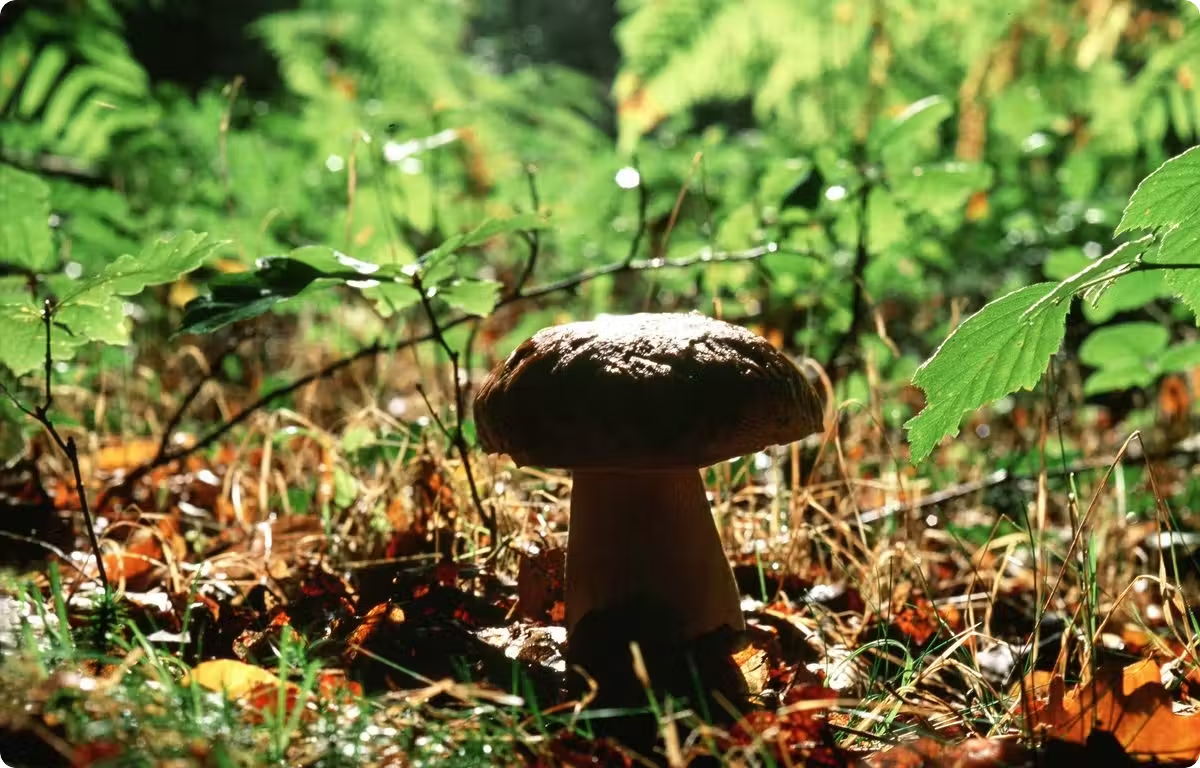
In the Dordogne department of France, the porcini mushroom season of 2026 has been described as atypical and extended. While mushrooms were absent from markets in September, significant quantities appeared in mid-October. According to Guillaume Eyssartier, mycologist and president of the Société Mycologique et Botanique du Périgord (SMBP), most of the growth occurred within a concentrated fifteen-day window. Emmanuelle Chignat, president of the Association des Cèpes du Périgord, noted that the forest had suffered from successive summer heatwaves, making the successful growth unexpected. Some areas, such as Ribérac, saw significant growth after years of scarcity, while others remained barren. [1]
The timing of the season has shifted over the last five years, starting progressively later. This year, the growth followed rainfall measuring between 100 mm and 150 mm, although Chignat observed that the best yields did not always correlate with the heaviest precipitation, suggesting that fog and falling temperatures also provided necessary humidity. Due to the extended nature of the season, Chignat announced plans to open two additional markets by the end of the week in northern Dordogne to centralize volumes from various producers. These markets offer four types of porcini, including the well-known Bordeaux porcini, though it is not the most common variety. [1]
Mycologists highlight a broader negative trend caused by climate change, with Eyssartier stating that current finds are only one-third to one-half of what was typically harvested thirty years ago. Seasons are becoming shorter and starting later, shifting from early September to mid-October, and typically concluding by mid-November. This environmental stress was evident in Normandy, where the 74th edition of the Mycologiades de Bellême, a major event for mushroom specialists, was canceled between October 8 and 11 due to drought and lack of growth. [1]
Market prices for porcini in Dordogne during October and November 2026 have remained generally stable, ranging from 10 to 25 euros per kilogram depending on quality, with exceptional specimens occasionally reaching 30 euros per kilogram. This price stability has persisted over the last decade. Historically, however, prices have increased; in 1996, prices ranged from 50 to 80 francs per kilogram, which is approximately 8 to 12 euros in current value. [1]
- Categories:
- Agriculture
- Entities: